

Why does this matter now more than ever?
The world is evolving at an extraordinary pace. Breakthroughs in AI and technology aren’t just reshaping industries, they’re reshaping what it means to learn, grow, and lead. In this rapidly changing landscape, students need more than answers, they need the mindset to ask bold questions, embrace challenges, and find their way through uncertainty.
That’s where our workshops come in.
Rooted in the belief that every student has the capacity to grow, we help schools and other education centers cultivate the skills that fuel lifelong learning, resilience, adaptability, and leadership. Through hands-on experiences in entrepreneurship, innovation, creativity, and design thinking, students begin to see challenges not as roadblocks, but as invitations to think differently and think boldly.
Because with an entrepreneurial mindset—and the right tools—students don’t just adapt to the future.
Our students shape the future
the design thinking methodology

pioneered by Apple and Stanford’s design school
As you well know, innovation and resilience are becoming increasingly critical in today’s ever-changing economy. To succeed in today’s world, students need to develop a resilient mindset and creative problem solving skills. They need to be able to adapt and pivot. This is what entrepreneurs do and this is what we teach.
We believe innovation can happen anywhere. It’s not confined to the Silicon Valley or Stanford or an MIT incubator. It’s fueled by students’ intellectual curiosity. And it starts with the design thinking methodology and the entrepreneurial resilient mindset.
The skills we teach will ensure students’ success in high school, college, and beyond!
What is design thinking?
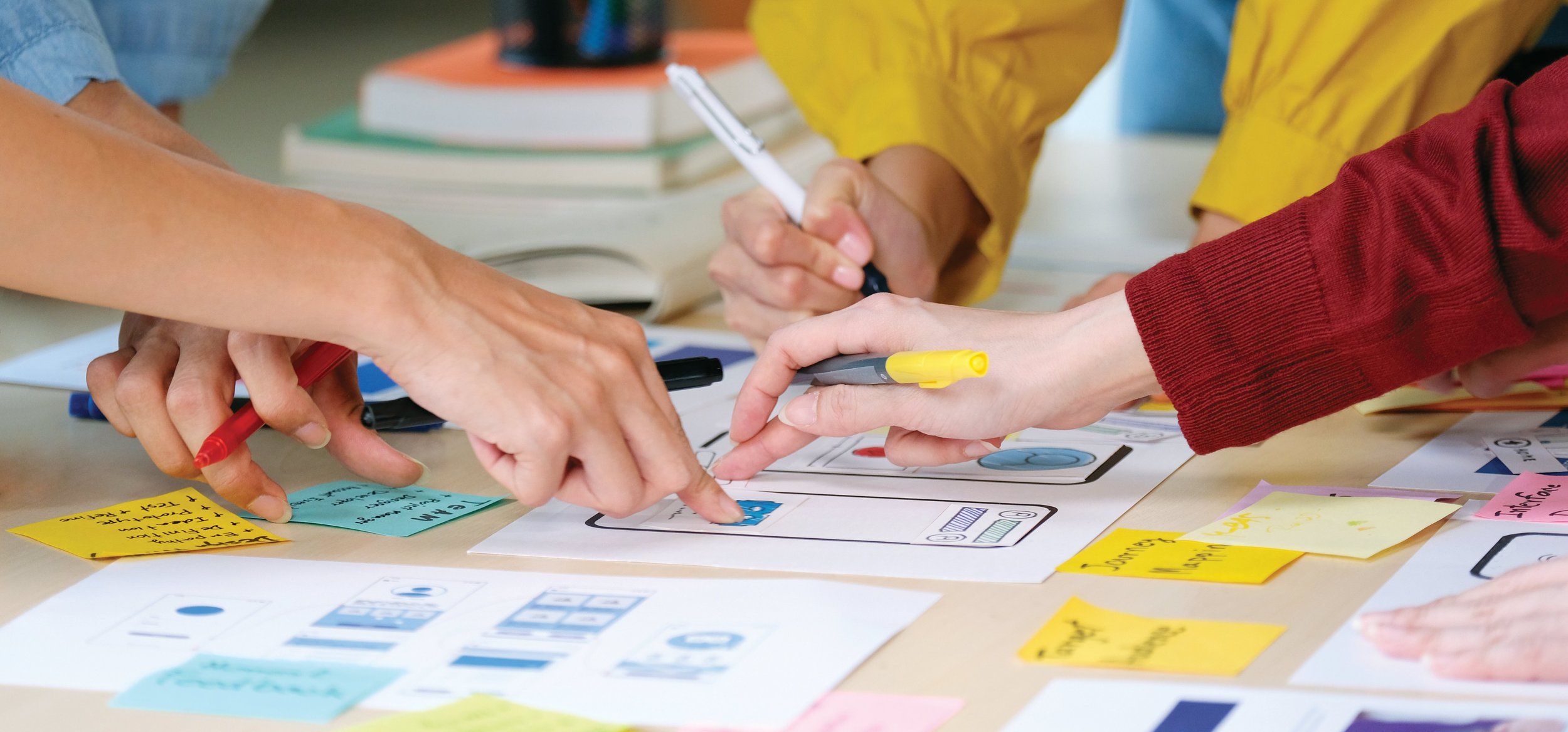
Design thinking is a human-centered, hands-on approach to problem solving—and it’s a powerful mindset for the classroom. At its heart, it’s about understanding the people you’re designing for, whether that’s your students, your colleagues, or your community.
As educators, we’re constantly designing—lessons, learning environments, systems, experiences. Design thinking gives you a flexible, creative way to tackle challenges, not with rigid plans, but with curiosity and experimentation. You start by listening deeply, exploring ideas through quick prototypes, and learning by doing.
It’s not about having the perfect answer—it’s about building confidence to try, reflect, and try again. That’s what we call creative confidence. And when students see you modeling that mindset, they begin to develop it too.
Design thinking invites you—and your students—to see yourselves as changemakers. It turns problem solving into a collaborative, hopeful process. And in a world that’s always evolving, it equips everyone in the room with the tools to adapt, create, and lead.
What competencies do we develop?
-
Students will be able to apply their understanding of the process and characteristics of business development and promotion in order to apply strategies of innovation to personal and professional business pursuits.
Students will be able to use their understanding of idea generation, design thinking, product and business development in order to introduce and process new and effective ideas.
Students will be able to learn from challenges, set-backs, and failure in order to adapt strategies and continue efforts to achieve personal goals.
-
Students will be able to use their newly acquired knowledge of personalized service, market demands, and fearless pitching to secure successful sales interactions
-
Students will be able to use their critical thinking skills to generate and evaluate solutions as they relate to the needs of the team, customer, and company
-
Students will be able to creatively problem solve in order to implement and communicate solutions.
-
Students will be able to goal setting to achieve professional goals and understand personal impact.
-
Students will be able to use time management skills to plan effectively and accomplish assigned tasks.
-
Students will be able to working cooperatively with others to complete tasks, achieve mutual goals, and create professional pitch materials.